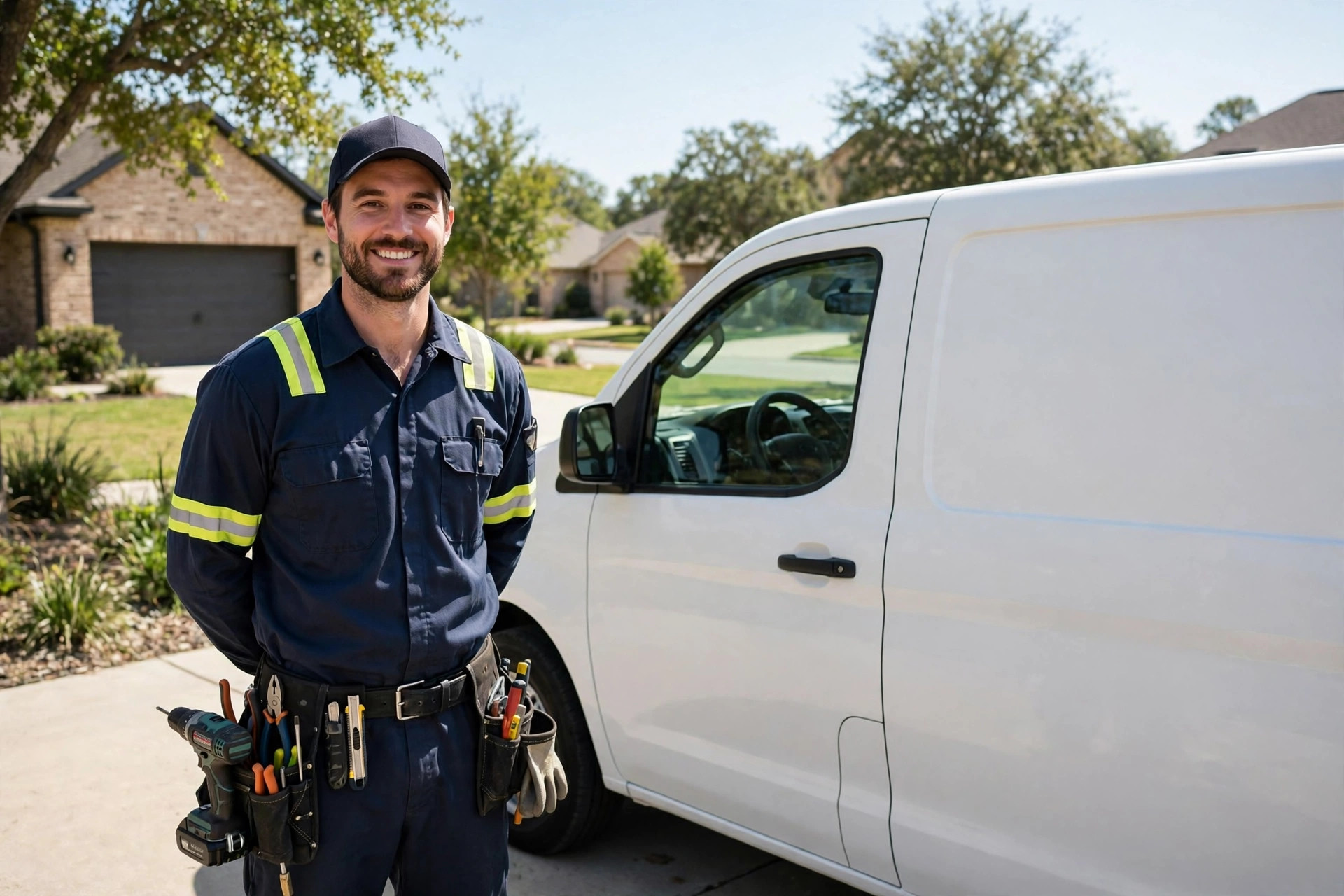
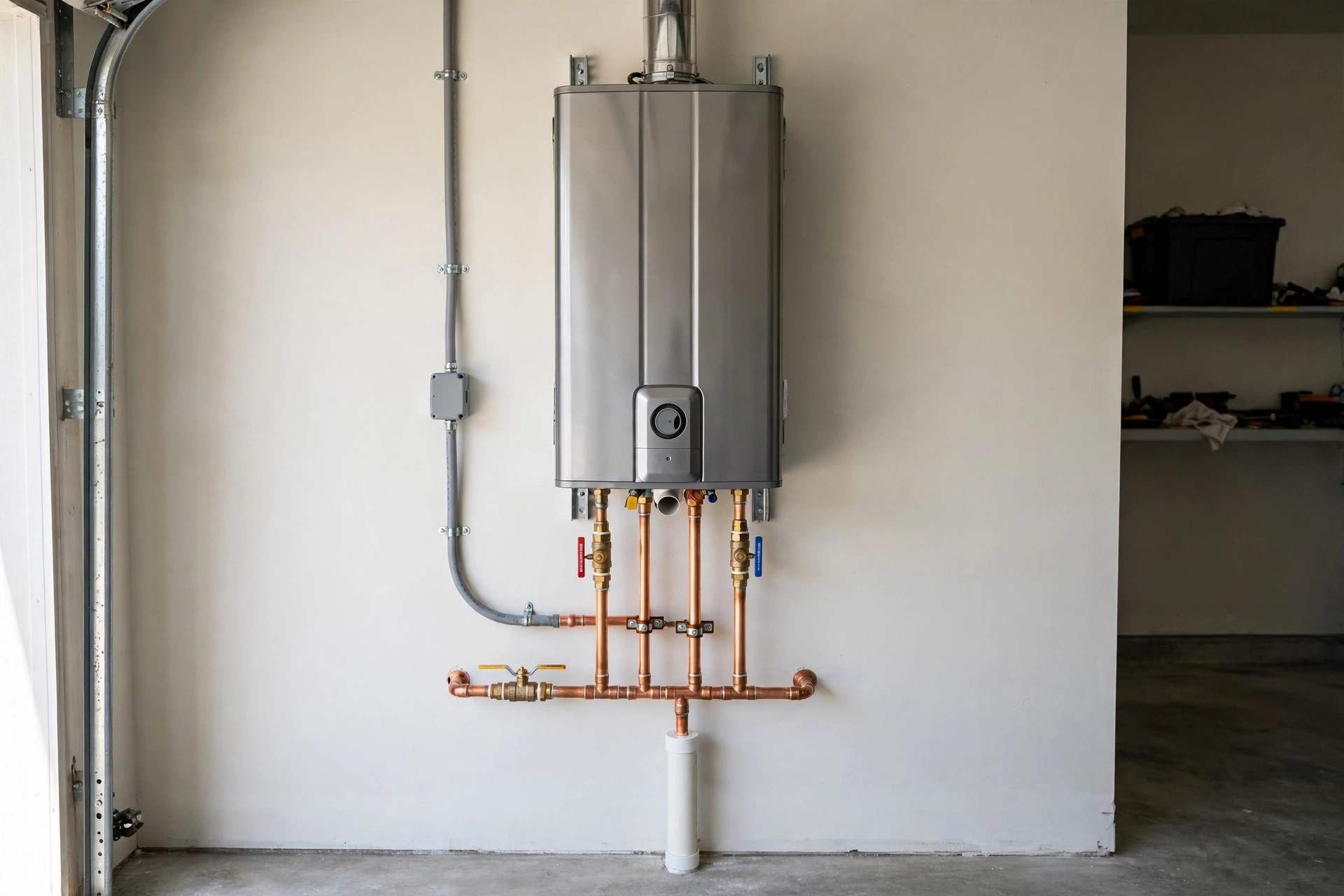
Water pooling under your heater? We find the source fast and tell you straight whether it needs a repair or a replacement. No upsell. No guesswork.
No spam. No obligation. Just practical help.
We show you the leak source before quoting. Repair when it makes sense, replace when it does not.
We service tank and tankless units from every major manufacturer, gas and electric.
Written for local hard water, heat, and codes. Not generic advice.
Your call connects you with an independent local technician.

DeSoto Water Heater Pros services water heaters across the city. From Danieldale to Frost Farms, we stop leaks fast and give you straight answers.
North Texas is tough on water heaters. The water here is hard, loaded with calcium and minerals. That sediment settles at the bottom of every tank in DeSoto and bakes into a crust. The crust makes the burner work harder. The tank runs hotter. It fails sooner.
Then there is the heat. Summer attic temperatures along Belt Line Road and Hampton Road can top 140 degrees. Many DeSoto homes keep the heater in the garage or attic, where that ambient heat cooks seals and valves year round. Add the expansive clay soil shifting slab foundations a fraction of an inch each season, and pipe connections loosen over time.
The result: local tanks typically last 8 to 12 years, shorter than the national average. When yours starts leaking, the question is rarely if you need help. It is whether a repair buys real time or just delays the inevitable. We answer that honestly, on site, with the unit in front of us.
Three steps, in order. First, kill the energy. Flip the breaker for an electric unit. For gas, turn the control knob on the unit to off. Second, shut the cold water inlet valve on top of the heater. Third, move anything valuable away from the water path.
Do not touch a gas valve that smells wrong or feels damaged. If you smell gas anywhere near the unit, leave the area and call from outside. Once the unit is safe and quiet, call us. We will talk you through what we see when we arrive.
This is the question every DeSoto homeowner asks, and it deserves a straight answer. Use this table as a starting point. We confirm it in person before you spend a dollar.
| Situation | Usually means |
|---|---|
| Leak from a fitting, valve, or flex line | Repair. These are serviceable parts. |
| Water seeping from the tank body or base | Replace. A leaking tank cannot be patched. |
| Unit under 8 years old with a part failure | Repair, if the tank is sound. |
| Unit over 10 years old needing a major part | Replace. The next failure is already coming. |
| Rusty hot water from taps | Replace soon. The tank lining is failing. |
| Rumbling or popping sounds | Heavy sediment. Flush may help, or the tank is already damaged. |
One rule of thumb: if the repair costs more than half of a new unit, replacement is the smarter money. We will show you both numbers side by side.
Top leaks are usually the good news kind. The culprits live up there: the cold water inlet connection, the hot water outlet, the temperature and pressure relief valve, or a flex supply line with a tired washer.
Dry everything with a towel. Wait ten minutes. Watch where fresh water appears first. If it beads at a threaded connection, that fitting likely needs reseating or replacing. If it runs down from under the top cap, call us before it migrates into the insulation. Top leaks are repairable in most cases, and catching them early keeps water out of your walls.
Leak diagnosis, honest repair, and full replacement for tank and tankless units.

We trace the water to its source. Fitting, valve, or tank. You see what we see.

Thermostats, elements, valves, and connections fixed right the first time.

Right sized for your home, installed to code, old unit hauled away.
Working from Pleasant Run Road to Wintergreen Road, we see the same failures repeat.
Hard water bakes sediment into a crust at the tank bottom. Burners overheat. Tanks fail years early. Annual flushing prevents most of it.
Many DeSoto homes put heaters in hot garages or attics. Heat cooks seals and valves. We see more connection leaks here than in basement states.
The safety valve drips or streams when pressure runs high. Common where thermal expansion tanks are missing or waterlogged.
Homes in Woodside and Kestrel Ridge with original builder grade units are hitting the end of their tanks right now. If your unit is past year ten and acting up, plan the replacement on your schedule instead of the tank's.
The temperature and pressure valve is a safety device. It opens when the tank gets too hot or pressure climbs too high. It is doing its job, and the underlying cause needs attention.
Common causes: a thermostat set too high, a failed thermal expansion tank, or a valve that has simply worn out. Do not cap it or plug it. A blocked relief valve turns a fixable problem into a dangerous one. We test the valve, check system pressure, and fix the root cause.
No. Shut it down. Even a slow drip soaks drywall, subfloor, and framing. Mold follows moisture within days in Texas humidity.
A leaking tank also never heals. The pinhole that drips today becomes the split that floods the garage tomorrow. Turn off the power or gas, close the inlet valve, and call. Waiting only raises the water bill and the repair bill.
Prices vary, so here is what actually moves the quote. We price every job in writing before starting.
| Factor | Why it matters |
|---|---|
| Repair vs. replacement | A valve swap and a full install are different jobs |
| Tank size and fuel type | Bigger tanks and gas units cost more than small electrics |
| Tank vs. tankless | Tankless units cost more upfront but last about twice as long |
| Code upgrades | Drain pans, expansion tanks, and venting updates add parts and labor |
| Location of the unit | Tight attics off Hampton Road take longer than open garages |
| Disposal | We haul the old tank away so you do not have to |
These are typical ranges from national cost data for 2026. Your price depends on the diagnosis.
| Service | Typical range |
|---|---|
| Diagnostic and service call | $75 to $200 |
| Minor repairs, thermostat or element | $100 to $350 |
| T and P relief valve replacement | $50 to $300 |
| Gas control valve replacement | $150 to $550 |
| Leak repairs, fittings and connections | $100 to $1,000 |
| New tank water heater, installed | $600 to $1,800 |
| New tankless water heater, installed | $800 to $3,500 |
Ranges are from HomeGuide 2026 national data, for planning only. Call us for a written price for your home before any work starts. No surprises after we begin.
120 degrees Fahrenheit. That is the U.S. Consumer Product Safety Commission recommendation, and it is the right number for DeSoto homes.
At 120, showers are comfortable and dishwashers clean fine. Scald risk drops sharply compared to 140. The tank also corrodes slower and your energy bill drops. If your unit is set higher, turn it down today. It takes thirty seconds.
Most water heater leaks start small and hide. The unit sits in a garage corner or a closet. You notice the damage late. Detection is the first step of every repair we do.
Start with the water meter test. Turn off every tap in the house. Watch the meter for fifteen minutes. If it moves, water is escaping somewhere. That is the simplest leak test there is.
Next, check the unit itself. Look for moisture around the base. Check the discharge pipe from the temperature and pressure relief valve. A valve that drips is telling you pressure or heat is too high. Feel the hot water outlet pipe and the cold inlet pipe. Wet fittings are the most common leak point in DeSoto homes, where hard water corrodes connections over time.
A sudden jump in your water bill is another sign. A slow leak can waste hundreds of gallons before you see a puddle. If the bill rose and your usage did not, check the water heater first.
When the leak is hidden inside a wall or under a slab, we use moisture meters and listening equipment to trace it. The goal is always the same. Find the exact source before quoting. You see the evidence, then you choose repair or replacement.
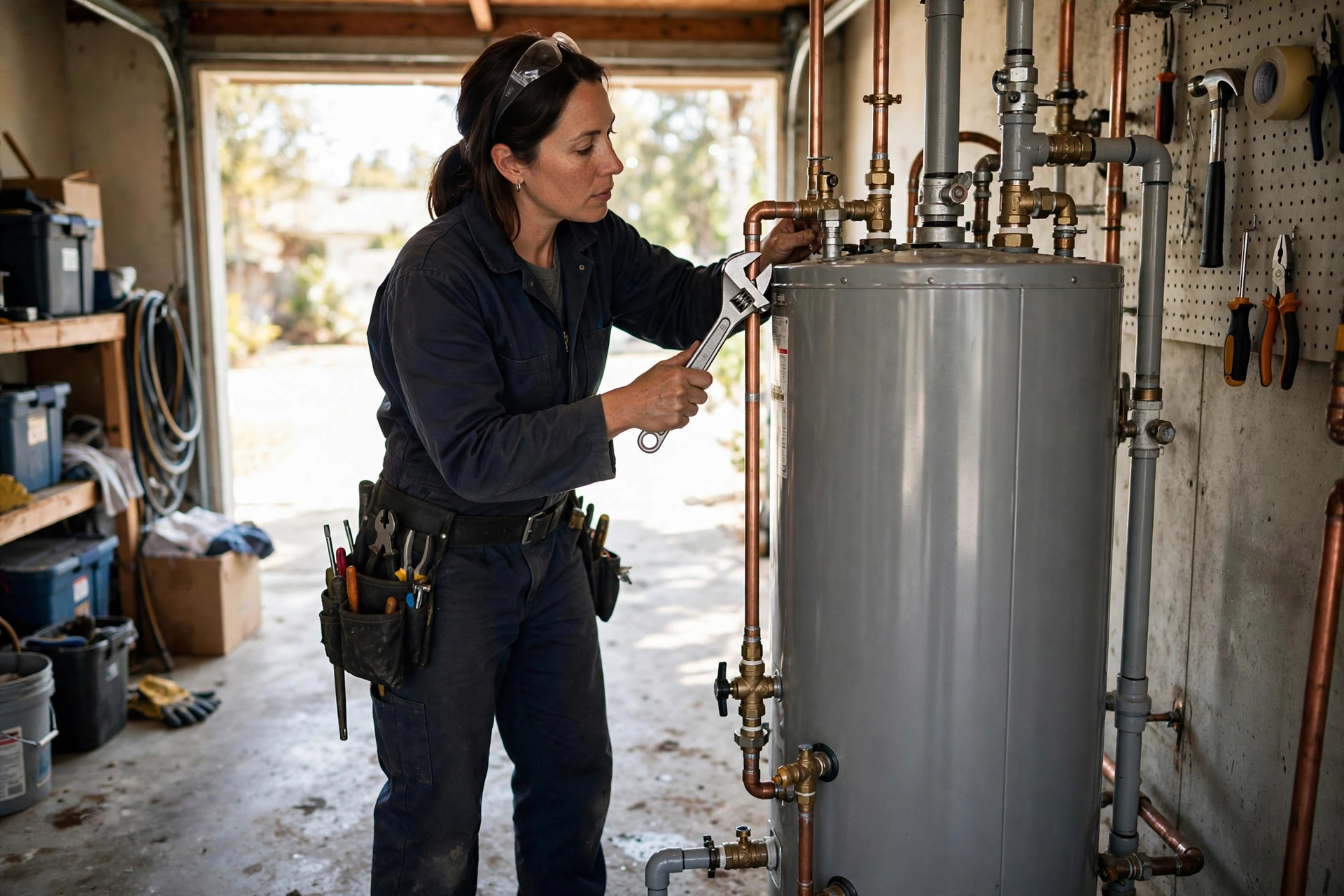
Yes. Tankless units have no tank to rust through, but they still leak. The usual points are the inlet and outlet fittings, the pressure relief valve, and the heat exchanger.
Hard water is the main cause in DeSoto. Scale builds inside the heat exchanger. That buildup traps heat, stresses the metal, and opens small leaks at joints. Regular descaling prevents most of it.
Detection works the same way as with a tank unit. Watch the meter. Check fittings for moisture. Watch for error codes on the display. A unit that shuts off or flashes a code is often protecting itself from a leak or a blockage.
Repair follows the same rule. Fix the fitting or the valve when the unit is otherwise sound. Replace the heat exchanger or the unit when corrosion has gone too far. We show you the leak source first, then give you both prices in writing.
Proudly serving DeSoto and nearby neighborhoods, from I-35E to the Glenn Heights line.
We cover ZIP codes 75115 and 75123.
Some things, yes. Resetting a tripped breaker is safe. Relighting a pilot per the label instructions is safe. Turning the thermostat down is safe.
Stop there. Gas controls, sealed heating elements, internal wiring, and anything involving a leaking tank belong to a professional. Water plus gas plus high voltage is not a learning project. A mistake can flood a room or worse. Call us and we will handle it.
Find the leak, get the truth, fix it right. Most repairs finish the same day.

We make the unit safe first. Power or gas off, water isolated, area protected.
We find the exact source. Fitting, valve, or tank. You see the evidence.
Repair price and replacement price, side by side, in writing. You choose.
We complete the work, test everything, and clean up before we leave.
Typically 8 to 12 years for tank models in North Texas. Hard water is the main reason they die young here. Sediment insulates the bottom, the burner overheats the steel, and the tank gives out.
You can stretch it. Flush sediment once a year. Have the anode rod checked every few years. That rod sacrifices itself so the tank does not have to. In DeSoto's water, it sacrifices fast, so check it on schedule.
A like for like tank swap usually takes 2 to 4 hours, including draining the old unit, installing the new one, and hauling the old tank away.
Switching fuel types or going tankless takes longer. Venting changes, gas line upsizing, or new electrical circuits add time. We map all of that out in the written quote before you commit, so there are no surprises on install day.
Three spots cause most leaks. The top fittings, where the cold inlet, hot outlet, and relief valve connect. The drain valve near the bottom. And the tank body itself.
Top fitting leaks are usually repairable. A tank body leaking from a seam or the base means replacement. The location of the water tells us which one you have.
No. Water and energy do not mix safely. On a gas unit, water can reach the burner. On an electric unit, it can reach wiring.
Turn off the power or gas first, then close the cold water inlet valve. Then call. A heater that is off and isolated cannot hurt anyone or flood further.
Nationally, diagnostic visits typically run $75 to $200 (see the table above). The fee usually covers finding the leak source and a written quote.
Before you book, ask one question: does the diagnostic fee apply to the repair if you go ahead? Many companies credit it. Get the answer in writing with the quote.
Sometimes, for sudden bursts. A tank that splits open and floods a room may be covered for the water damage. Slow leaks and worn out tanks are almost never covered.
Take photos of the damage before anything is moved. Then call your agent and ask what your policy covers. We document the failure cause in writing, which helps with the claim.
Treat it as urgent. An active leak can flood a garage or closet in hours. Water finds drywall, flooring, and anything stored nearby.
Call any time. We will help you shut it down safely over the phone and connect you with a local technician fast.
We are new in DeSoto. Our reviews are being written one job at a time.
When we finish a repair, we ask the homeowner for an honest review. Good or bad, we want to hear it. That is how a local company earns trust.
Had us out for a repair? Tell us about it.
Do not let a small drip become a flooded room. Get an honest diagnosis today.
Call (972) 555-0138 Now